

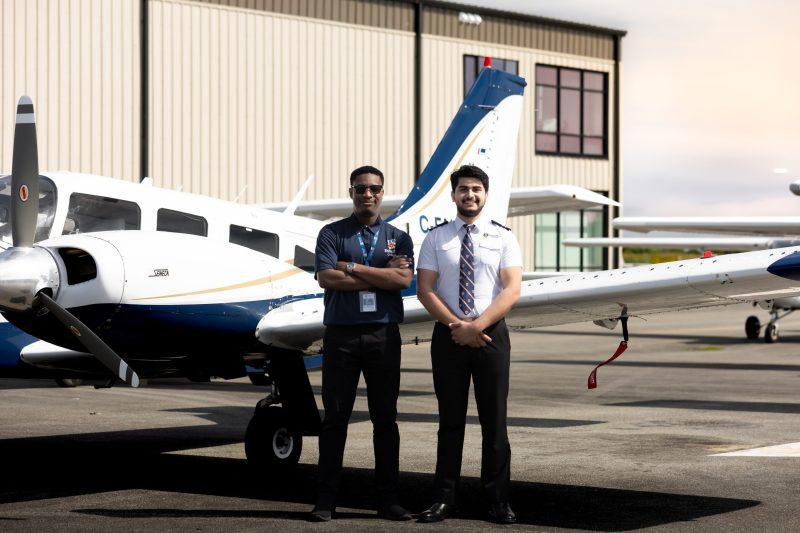
Flexible programs, modern aircraft, and career-focused instruction allow BC pilot schools to meet Canada’s aviation demand through adaptation.
Something Has Shifted in Canadian Aviation
If you talk to anyone in aviation lately — instructors, students, even airline recruiters — you’ll hear the same thing: things are changing.
Canada’s aviation industry is changing. It is not stagnant, but rather, it is rapidly growing. Retirements are happening in the industry faster than recruiters anticipate. Regional flying is expanding. Charter, cargo, medevac, and training operations are busier than they were a few years ago. And pilot schools in BC are not blind to this phenomenon.
A student told me once, “It seems like the industry finally needs us.” It’s a correct assumption.
Throughout BC, pilot schools are changing how they train and license students to become pilots. They are training students for the industry rather than just for a license.
Why Aviation Demand Is Growing in Canada
From an advisor’s point of view, the demand makes sense.
In Canada, reliance on planes is essential since we have long distances between cities, remote communities, and spread-out geography, and a significant part of the current pilot workforce is approaching retirement. Students understand the urgency of the situation, as one said, “I used to think becoming a pilot was risky. Now it feels like timing actually matters.” This demand has meant changing the way school structures of pilot training in British Columbia, since it has some of the best learning conditions in the world because of its airspace, weather, and geography training. Altitude Academy believes case-based learning/scenario-based learning is the best way to quickly and effectively prepare students to enter a new industry. In Canada, scenario-based learning is a relatively new concept, but it is quickly becoming dominant in pilot schools. Graduates appreciate Altitude Academy and say they are doing “a great job preparing students for the industry.” Graduates of pilot schools used to say they came out with “just the bare minimum” to enable them to enter the aviation industry. Now, they say pilot schools fill the industry gaps more effectively and, in turn, are elevating the gaps in the aviation industry more quickly. In British Columbia, pilot schools are becoming more flexible with their training. This means they can train some students part-time and transition to full-time as their circumstances permit.
- More Flexible Scheduling
- Improved Training Planning
- Support for students transitioning from PPL to CPL
- Clear milestones instead of rigid timelines
- Staying on-track rather than feeling overwhelmed from an advisor’s point of view is a motivator for students. From a student’s point of view, it makes aviation training realistic, not scary.
- More Modern Aircraft and Simulators
- The second large shift is in equipment.
The demand for pilots in Canada’s aviation industry is requiring BC flight schools to become more invested in:
- New aircraft
- Modern avionics
- More sim-based training
- Training on procedures before actual flight
Insignia College uses simulators as teaching resources, not just as backups. Students rehearse scenarios they might not experience in a real, live flight such as adverse weather, system failures, and workload management.
One student put it like this: “I mess up in the sim first. That makes the real flight less stressful.”
Increasing Support for International Students
International aviation students have always been drawn to BC, and it continues to be true as the demand for pilots in Canada grows.
Changes students are seeing pilot schools make include:
More transparent guidance with:
- Admissions
- Student services
- Training requirements
- Visa info
Schools like Insignia College can help with the visa process, but they can’t offer legal advice about immigration. Students have to talk to an immigration lawyer or contact IRCC with immigration-related questions. This is a clearer distinction that schools are making now compared to before, reducing ambiguity.
Documents and Licensing Are Being Addressed Earlier
Students also notice that pilot schools are talking about documentation requirements earlier.
Instead of waiting until processes are further along, schools explain the following are usually required from the beginning:
- Medical certificates
- Academic records
- Flight records
- PPL or CPL (if applicable)
One student remarked, “I knew exactly what I needed before starting. No surprises,” and this upfront approach is appreciated. Additional requirements for certain programs are standard in the aviation industry.
Ground School Is Becoming More Engaging
Ground school used to scare people and now in many BC pilot schools, it’s becoming one of the stronger parts of training.
Instructors are using:
- Real-life flight experiences
- The weather conditions students are experiencing in BC
- Conversations as oppose to lectures
Practical reasoning
One student said, “I thought ground school would be boring. Turns out it explains everything I was confused about in the air.”
That’s intentional. Schools have been adjusting their methods to be in line with how learners today learn.
Why BC Presently Offers Excellent Training Opportunities
From both the student and advisor perspective, British Columbia provides a distinctive offering.
You train in:
- Unpredictable Weather
- Coastal and Inland Weather
- Busy and Sparse Air Traffic
- Real Navigation Challenges
This prepares pilots for the Canadian aviation landscape. It is for this reason that BC aviation schools are best suited to fulfil the current industry requirements.
At Insignia College, students frequently state that they believe they have a greater capability to fly in a variety of weather scenarios than their peers who have trained in other locations.
What This Means for Future Pilots
If you are currently considering beginning your training to become a pilot, your timing is ideal. The Canadian aviation market is in need of skilled pilots. Not just pilots with a license.
BC pilot schools are adjusting by:
- Conducting mobile realistic assessments
- Implementing differentiated instruction
- Continuing with modern educational approaches
- Aligning instruction with industry expectations
- Preparing students for actual jobs in aviation
One advisor summed it up best: “We’re not just training pilots anymore. We’re preparing professionals.”
Thinking About Training in BC?
If aviation is in your sights and you are keeping your eye on industry trends, training in BC is a logical step. Insignia College and similar schools are reconfiguring their curriculum to align with student expectations and industry needs.
Whether you are just considering it or have already charted your course, speaking with a pilot school helps you identify your place in Canada’s aviation ecosystem.
Contact Insignia College to discover the evolution of pilot training and your place in it.
Often, it is the culmination of industry trends that propels someone into the pilot’s seat.