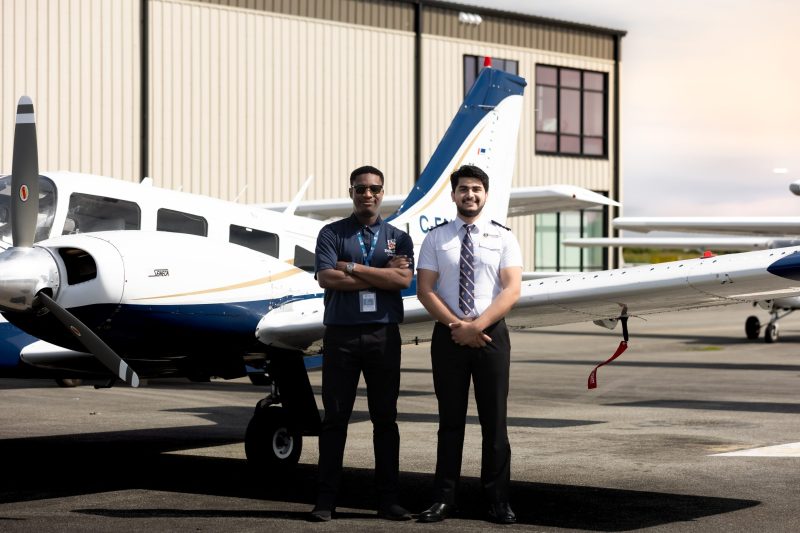
Flight School Canada (2026)

What Should Future Pilots Compare Before Choosing a Training School?

Comparing the quality of training, the safety of instructors, the experience of instructors, aircraft quality, the quality of facilities, the quality of support services, and the quality of career-focused opportunities should help future pilots select a training school in Canada.

Choosing a Flight School in Canada Is a Major Decision

For future pilots, selecting a flight school in Canada is one of the first big decisions along a path to an aviation career.

For most people, the first big question is, “Where can I learn to fly?” That is only one of many questions that should be asked. “Where can I learn to fly safely?” is a much more important question to consider.

A flight school should be the place of your first decision-making practice on the skills and habits of flying. The aircraft, quality of instructors, student support systems, and overall learning and training environment all affect the experience of training and how you progress in your flying development.

Canada has quality aviation training, but every flight school can offer a different journey. Selecting the right flight school can help you reach your goal in 2026.

Why Choosing the Right Flight School Matters

Learning how to fly is a big time and financial commitment.

The right flight school matters because it can positively impact:

  • The training experience and the confidence of a pilot
  • The ability to reach the different stages of training
  • The aircraft flying standards and professional behavior of a flying pilot.

A good flight school builds more than just flying skills.

Students should learn about:

  • Safe decision-making
  • Aircraft operations
  • Flight preparation
  • Aviation responsibilities
  • Professional expectations

The aspect of flying that interests most people is learning how to control an aircraft. What most people don’t realize is that there is an equal, if not greater, component of decision-making before, during and after each flight.

What Should Future Pilots Compare Before Choosing a Flight School?

There are students who only compare flight schools based on price, but you have to consider other factors as well. Price doesn’t always reflect value.

When some students compare flight schools in Canada to others, they consider the complete training experience, rather than focusing just on price.

Training Standards and Transport Canada Approval

The first thing a student should investigate is to see if the school complies with Transport Canada’s requirements.

Flight standards and training established by Transport Canada are the laws and restrictions regulating approved flight training schools.

Students must know:

  • The available licenses and ratings
  • The organization of the training
  • If the training programs comply with the standards of Canadian aviation
  • The requirements at each stage

For individuals interested in pursuing a career in professional aviation, knowledge of the entire training path is important.

Instructor Experience and Teaching Methods

An aircraft is important. However, the person teaching you how to operate it may be even more important.

Flight instructors develop a student’s operating habits.

When comparing schools, consider:

  • Instructor experience
  • Teaching methods
  • Number of instructors employed
  • Training support
  • Methods of instructor feedback

A good instructor does not just demonstrate how to perform a maneuver.

They help students understand the reasons for the decisions made.

That becomes more necessary with progressing levels of training.

Aircraft Fleet and Training Resources

The aircraft used in training is another important consideration.

Students spend a large number of hours in these aircraft, thus reliability and availability issues are concerns.

When evaluating a flight school consider the following:

  • What aircraft are available for training?
  • How often are the aircraft maintained?
  • Are aircraft consistently available to the student?
  • Are simulator resources available?

A reliable training environment aids the students in maintaining consistency.

Long gaps between flights can lead to a lack of confidence, and memory of previously acquired skills is lost.

Classroom Learning and Simulator Training

Modern aviation training involves much more than time in the cockpit.

Ground school provides students an understanding of the theory of flight.

Important aspects of ground school include:

  • Aviation regulations
  • Weather
  • Navigation
  • Aircraft systems
  • Flight planning
  • Human factors

Simulator training can also be very beneficial.

Students are able to practice flying in different scenarios before they encounter them in real-world flying situations.

A combination of classroom learning, simulator practice, and flying is a complete training system.

Location and Flying Environment

Where you train can also impact your training experience.

There are many ways that the different climates of Canada can bring a diverse experience to flying.

Students may encounter:

  • Weather
  • Controlled Airspace
  • Cross Country Pilotage and Navigation
  • Airport and flying environments of varying complexity
  • Practical flight planning issues

Training in BC offers students a variety of flying conditions.

At Insignia College in Delta, BC, students can pursue flying as a career while gaining flying skills in a convenient learning environment supported by flying instructors and flying resources.

Student Support and Communication

Flying training adds many new concepts to be learned and many new skills to be developed and many exams to be prepared for.

Without student support, flying training would be unmanageable.

When comparing flying training schools, consider the following:

  • How easily the instructors can be reached
  • How the admissions staff answers your questions
  • What sort of support is offered while in a training program
  • How students are supported throughout the flying program

A supportive training program can help ease the stress of the flying training experience.

Training Pathway Understanding

Many students, when they first start looking for a flying school, have little to no understanding of the entire aviation pathway.

The pathway usually develops one step at a time.

Students often start with getting their Private Pilot Licence (PPL) and progress to further training and getting their Commercial Pilot Licence (CPL) and so on.

This path is not intended to be completed in a checklist manner.

The objective is to become a safe and responsible pilot.

For the Insignia College programs, reviewing the current program information and speaking with an admissions officer is the best way to learn about the available training pathway.

How About International Students?

Canada attracts students from overseas looking to study aviation.

International students need to consider both flying training and immigration requirements.

General information on the visa process is something Insignia College is happy to provide.

The College cannot assist with any immigration or legal issues.

For any immigration-related eligibility, permit or legal status question, or for a query regarding a personal situation, students should contact:

  • Immigration, Refugees and Citizenship Canada (IRCC)
  • A Licensed Immigration Consultant
  • A Lawyer

It is important to get the correct information about immigration, as the requirements might change at any time.

Important Questions To Ask Before Selecting A Flight School

Before making a decision, future pilots must ask some crucial questions, e.g.,

  • What licenses and ratings can students expect to obtain?
  • What is the typical training schedule like?
  • Which aircraft does the school offer?
  • How is allocation of instructors to students determined?
  • How comprehensive are the student resources?
  • What is the support structure offered to students?
  • What are the admission prerequisites?

Being more inquisitive before enrolling will make one more prepared.

Why Do Students Like Insignia College?

Because Insignia College is one of the schools where students can find a comprehensive training environment with experienced instructors and aviation resources, it is a popular choice among potential students.

Insignia College in Delta BC offers:

  • Aviation focused training
  • Aircraft Resources
  • Instructor Resources
  • Simulator Resources
  • Student guidance

Finding the right environment is crucial to developing your skills and confidence to become a competent, safe pilot.

It helps fulfill your learning goals and aids in the development of your aviation knowledge.

Understand the important factors:

  • Training Quality
  • Instructors
  • Aircraft
  • Learning Atmosphere
  • Support for Students
  • Your Future Goals in Aviation

If you are searching through flight training in Canada, Insignia College is the best place to look for programs, their prerequisites, and how to begin your aviation career.

Everyone must make a decision about where they begin their journey, and that is especially true for every hopeful new career in aviation; this is where every professional pilot begins.

Call Now Button
Notice: Surrey Campus is Closed.